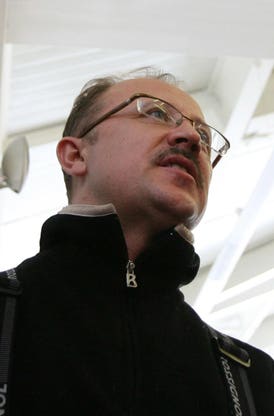
Mikhail Fedyaev: What Happened to His $1.2 Billion Fortune?
Mikhail Fedyaev’s name once resonated with the titans of Russian industry. As of March 2013, Forbes estimated his net worth at a staggering $1.2 billion, primarily amassed through shrewd investments in critical sectors like coal, machinery, and railway transport. He was a quintessential self-made man, rising from humble beginnings to co-found and control the sprawling Siberian Business Union (SDS), a conglomerate with diverse interests spanning mining, chemicals, engineering, and transportation. But fortunes, especially in the often-turbulent world of heavy industry, can be as volatile as the commodities they trade. The question that lingers is: what became of this immense
Mikhail Fedyaev's net worth and the empire he helped build? His journey from a car factory mechanic to a billionaire, and the subsequent dramatic turn of events, offers a compelling, albeit tragic, narrative of ambition, power, and the profound weight of corporate responsibility.
The Ascent of an Industrial Titan: From Mechanic to Billionaire
Mikhail Yuryevich Fedyaev's professional journey began far from the boardrooms of a billion-dollar empire. Educated at Kuzbass Polytechnic Institute, where he earned a bachelor's degree in engineering, Fedyaev initially cut his teeth in the working world as a mechanic in a car factory and later as a tractor operator. His early career also saw him quickly advance to positions like deputy head of a motorcade, demonstrating an innate capability for leadership and operational management. By the early 1990s, he was already at the helm of significant industrial enterprises in the Kuzbass region, including "Ekro," "Sibecom," and "Partner-Grundfos."
The pivotal moment in Fedyaev's career arrived in 1999 when he co-founded the Siberian Business Union (SDS) with his long-time partner, Vladimir Gridin. Their collaboration, bolstered by the crucial support of Aman Tuleyev, the then-governor of Kemerovo Oblast, laid the groundwork for what would become an industrial behemoth. SDS rapidly diversified its interests, encompassing coal mining, engineering, chemicals, transportation, and construction. This strategic expansion allowed them to tap into multiple revenue streams and solidify their foothold in Russia's industrial landscape. By 2013, under Fedyaev's visionary leadership, SDS was reportedly producing over 20 million tons of coal annually – a testament to its massive scale and efficiency.
One of SDS's most significant strategic moves came with the acquisition of a fertilizer manufacturer in Kemerovo from Sibur for approximately $1 billion. This bold step not only broadened the conglomerate's portfolio into the crucial agricultural sector but also highlighted Fedyaev's acumen for identifying and capitalizing on growth opportunities. His contributions to the industry did not go unnoticed, earning him accolades such as the "Miner's Glory" badge and the medal "For Special Contribution to the Development of Kuzbass." For a deeper dive into the makings of this industrial giant, explore
Inside Mikhail Fedyaev's $1.2 Billion SDS Business Empire.
Peaking at $1.2 Billion: The Foundation of Fedyaev's Fortune
By 2013, Mikhail Fedyaev’s financial standing was at its zenith, with his personal fortune estimated at a remarkable $1.2 billion. This substantial
mikhail fedyaev net worth was not just a figure; it represented years of strategic investment, relentless expansion, and astute management in some of Russia's most vital economic sectors. His wealth was predominantly derived from:
- Coal Mining: As the backbone of SDS, the conglomerate's vast coal mining operations, which churned out over 20 million tons annually, were undoubtedly the largest contributor to his wealth. The global demand for energy, particularly coal, provided a robust and consistent revenue stream.
- Machinery: Investments in heavy machinery, crucial for mining and construction, provided both operational efficiency for SDS and potential additional revenue through related ventures.
- Railway Transport: Ownership or significant stakes in railway transport infrastructure and services were strategic, ensuring efficient logistics for moving vast quantities of coal and other industrial goods across Russia. This vertical integration enhanced profitability and control over the supply chain.
- Chemicals & Fertilizers: The billion-dollar acquisition of a fertilizer manufacturer from Sibur significantly diversified SDS's assets and Fedyaev's personal portfolio, tapping into the lucrative agricultural chemicals market.
This diversified yet interconnected portfolio provided a strong foundation for Fedyaev's wealth. His ability to identify synergies between industries – from extracting raw materials to processing them and transporting them to market – was a hallmark of his entrepreneurial genius. The $1.2 billion
mikhail fedyaev net worth in 2013 positioned him firmly among Russia's elite billionaires, a testament to the immense potential of strategic investment in resource-rich economies.
The Unraveling: Tragedy, Arrest, and a Shifting Financial Landscape
The narrative of Mikhail Fedyaev's fortune took a dramatic and somber turn in November 2021. A catastrophic methane explosion at the Listvyazhnaya coal mine, an SDS-owned facility in the Kemerovo region, resulted in a tragic loss of life: 46 miners and five rescuers perished. This incident sent shockwaves through Russia and put a harsh spotlight on industrial safety standards and corporate accountability.
The consequences for Fedyaev were swift and severe. In December 2021, he was arrested and subsequently charged with abuse of authority leading to severe consequences. The legal scrutiny and public outrage surrounding the disaster marked a significant turning point in his career and profoundly impacted his public standing and, inevitably, his financial health.
By 2021, the same year as the tragedy, Mikhail Fedyaev was notably absent from Russia's top 200 wealthiest individuals list. This stark absence, contrasted with his $1.2 billion net worth just eight years prior, signaled a significant shift in his financial standing. While the precise details of his financial decline are not fully public, several factors could have contributed:
- Legal Costs and Fines: Defending against serious criminal charges incurs substantial legal expenses. Furthermore, any subsequent civil lawsuits or corporate fines related to the mine disaster could have significantly drained personal and corporate assets.
- Asset Freezes: In cases of serious charges, authorities often freeze assets belonging to individuals and related companies to prevent their dissipation, impacting the ability to access or leverage wealth.
- Business Valuation Decline: The Listvyazhnaya tragedy, coupled with the legal fallout, would undoubtedly have damaged SDS's reputation and potentially its operational capabilities, leading to a decline in its overall valuation. As much of Fedyaev's net worth was tied to his stake in SDS, this would directly impact his personal wealth.
- Economic and Political Climate: While not solely attributable to the mine incident, the broader economic and geopolitical shifts in Russia after 2013 could also have influenced the valuation of his assets and the general landscape for billionaires.
The incident at Listvyazhnaya served as a stark reminder that immense wealth in hazardous industries comes with equally immense responsibilities. The failure to uphold safety standards can have devastating human and financial costs, capable of unraveling a lifetime of business building.
The Aftermath and Lessons in Corporate Responsibility
The legal ramifications of the Listvyazhnaya tragedy continued for Mikhail Fedyaev. In 2025, he was reportedly sentenced to 3.5 years of probation. While this outcome concluded a long legal process, the incident's impact on his personal wealth and legacy is indelible. The story of Fedyaev's rise and fall offers critical lessons in corporate responsibility and the fragile nature of even the most colossal fortunes.
Here are some key insights from this unfolding narrative:
- The Human Cost of Negligence: The Listvyazhnaya tragedy underscores that in industries like coal mining, safety is paramount. Cutting corners can lead to catastrophic human loss, which no amount of financial success can ever offset.
- Accountability at the Top: The charges against Fedyaev highlight the increasing trend of holding top executives personally accountable for corporate failures, especially when safety protocols are compromised. This sets a precedent for leaders in high-risk sectors.
- Reputation and Value Erosion: A major industrial accident and the subsequent legal battles can severely damage a company's reputation, affecting investor confidence, operational efficiency, and ultimately, its market valuation. For owners whose wealth is tied to their companies, this translates directly into a diminished mikhail fedyaev net worth.
- The Interplay of Power and Ethics: While political connections (like support from Aman Tuleyev) can facilitate rapid growth, they do not absolve businesses of their ethical obligations or shield them entirely from the consequences of severe incidents.
- The Volatility of Wealth: Fedyaev’s story is a powerful illustration of how quickly fortunes can change. An estimated $1.2 billion net worth can diminish significantly when confronted with legal challenges, reputational damage, and the direct financial costs associated with major industrial disasters.
In essence, Fedyaev’s journey serves as a powerful cautionary tale: while ambition and strategic prowess can build empires, enduring success and a lasting legacy are inextricably linked to a unwavering commitment to safety, ethics, and corporate governance.
Conclusion
Mikhail Fedyaev's trajectory from a factory mechanic to a $1.2 billion industrial magnate is a testament to entrepreneurial drive and the vast opportunities available in Russia's resource sectors. He skillfully navigated the complexities of business to build the formidable Siberian Business Union, diversifying its interests and establishing a significant presence in multiple key industries. However, the tragic events at the Listvyazhnaya coal mine in 2021 cast a long shadow over his achievements, leading to severe legal consequences and a dramatic shift in his financial standing. The question of "what happened to his $1.2 billion fortune" is answered not by a simple financial downturn, but by a profound narrative where corporate responsibility, human life, and the rule of law intersected, demonstrating that even the most substantial wealth can be dramatically impacted by unforeseen tragedies and the ultimate accountability that comes with leadership in hazardous industries. His story remains a stark reminder of the immense responsibilities that accompany immense power and wealth.